
Water Extraction & Removal in Pensacola, FL
Standing water does more damage the longer it stays. It soaks into carpet, seeps under flooring, and wicks up into walls and cabinets. Pensacola Restoration Pro helps homeowners, renters, and businesses in Pensacola, Florida get water out of the property so drying and repairs can begin.
Describe the water you are dealing with and we will talk through what removal may involve for your property. We are available 24/7 for emergencies, and estimates are free.
- 24/7 Emergency Calls
- Free Estimates
- Licensed and Insured
What Water Extraction and Removal Means
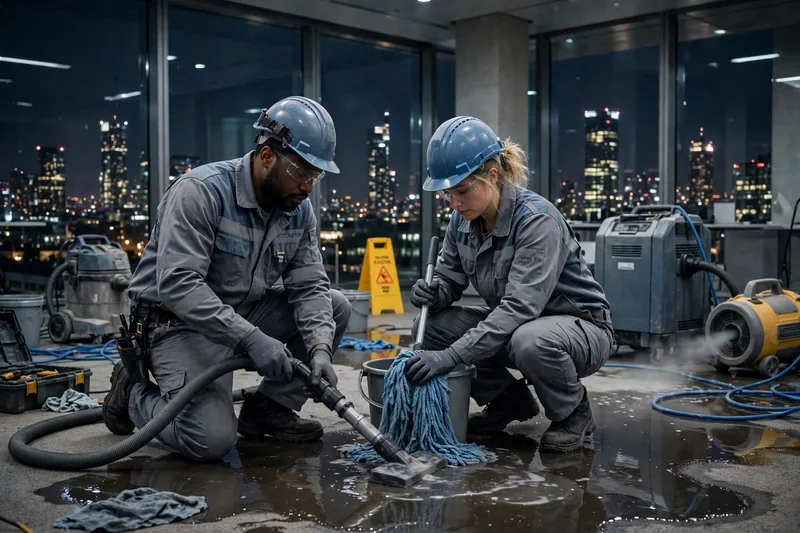
Water extraction is the first physical step in most water damage jobs. It removes liquid water from floors and low areas before drying equipment is used. Removing the bulk of the water first saves time and reduces how much moisture the building has to release afterward.
Extraction vs. Drying
Extraction pulls out the water you can see and the water pooled in carpet and pad. Drying deals with the moisture left inside materials such as drywall, subfloor, and framing. Both steps are needed. Extraction alone does not dry a building. Our structural drying and dehumidification page covers the second step.
When Standing Water Needs Professional Removal
Mopping and a household wet vacuum work for a small spill. Professional extraction is worth considering when:
- Water covers a large area or more than one room
- Carpet and pad are saturated
- Water has soaked into a basement or crawl space
- The water may be contaminated
- Water has stood for more than a day
- You are unsure how far the water has spread
Common Causes of Standing Water in Pensacola Properties
Standing water in Pensacola usually comes from a plumbing failure, a storm, or poor drainage. Knowing the cause helps decide how the water is handled.
Plumbing Failures and Appliance Overflows
A burst pipe, a failed washing machine hose, an overflowing tub, or a broken water heater can leave inches of water on a floor. Burst pipe and water heater leaks each have their own page.
Heavy Rain, Storm Surge, and Flooding
Pensacola's Gulf Coast location brings tropical storms and heavy downpours. Rain can enter through doors, windows, a damaged roof, or low ground. Water that comes from outside can carry mud, debris, and bacteria. Our flood and storm damage cleanup page covers that type of loss.
Water in Basements, Crawl Spaces, and Low Areas
Low spaces collect water first. Garages, ground-floor rooms, crawl spaces, and basements can hold water after heavy rain or a plumbing failure. Older raised homes in neighborhoods such as North Hill and East Hill have crawl spaces that may hold water out of sight.
How Our Water Extraction Process Works
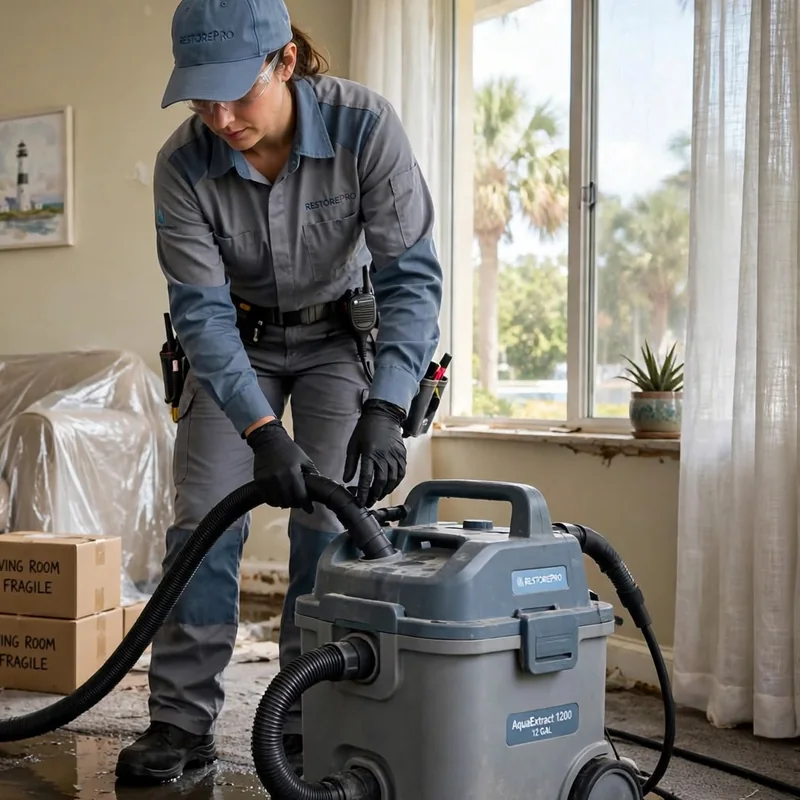
A careful extraction protects the building and the people in it. The specific approach changes with the type of water, the flooring, and the layout of your property.
Checking Safety and Water Type First
Before water removal begins, we check for electrical hazards and slip risks. We also consider the source. Industry guidance such as ANSI/IICRC S500 groups water into three categories, from clean (Category 1) to heavily contaminated (Category 3). Contaminated water needs protective gear and careful disposal of affected materials.
Removing Water From Floors and Carpet
We remove standing water using pumps for deeper water and extraction tools and wet vacuums for floors and carpet. Carpet and padding are checked to see whether they can be dried in place or need to be lifted. Hard floors and tile are cleared so water does not seep into seams and edges.
Moisture Mapping After Water Is Removed
When the standing water is gone, the job is not finished. We use moisture meters to check walls, baseboards, and flooring for water that remains. This tells us where drying is needed and helps prevent leftover moisture from turning into mold.
Materials Affected by Standing Water
Different materials respond to water in different ways. Quick extraction can help you save more of them.
Carpet, Padding, and Hardwood Floors
Carpet may survive a short exposure to clean water if it is extracted and dried quickly. Padding often holds water and may need replacement. Hardwood can cup or buckle if water sits under it, which is a particular concern in older Pensacola homes with original wood floors.
Drywall, Baseboards, and Cabinets
Water wicks upward into drywall and baseboards from the floor. Cabinets can swell at the base. Early removal of standing water reduces how far moisture climbs. Some of these materials may still need further drying or replacement, depending on how long they stayed wet.
Water Extraction Near Me in Pensacola, FL
If you need water removed near you, our office is at 238 W Intendencia St, Pensacola, FL 32502. We serve properties across Pensacola, including ZIP codes 32501, 32502, 32503, 32504, and 32505.
When you call, tell us your address or neighborhood, how deep the water is, and which rooms are affected. We will confirm whether we can help at your location. If water first appeared suddenly, our emergency water damage restoration page lists the first steps to take.
Residential and Commercial Water Removal
For Homes and Apartments
Standing water in a living space is also a safety and health concern. Tell us whether anyone lives in the affected area, and whether children, pets, or older adults are at home.
For Businesses and Property Managers
Water in an office, shop, or rental building can damage stock, equipment, and flooring and shut down daily work. We handle commercial properties too.
Related Work That May Need Another Professional
Water extraction removes water. It does not fix what let the water in. After drying, we can also handle repairs and rebuilding, such as drywall, insulation, and flooring. A broken pipe may need a licensed plumber, a roof leak a roofer, and wet electrical systems a qualified electrician. We will tell you when another professional is needed so the source is repaired and the problem does not repeat.
Contact Pensacola Restoration Pro About Water Removal
If water is standing in your property, the sooner you call, the sooner you can find out how far it has spread.
Reach Us Any Hour
What to Tell Us When You Call
Share your address or neighborhood, where the water came from, how much water there is, and which rooms and floors are affected. Mention if it could be sewage or floodwater. Have general questions first? Our FAQ page answers many of them.