
Water Damage Restoration Services in Pensacola, FL
Water damage comes in many forms, and the right response depends on where the water came from and how far it spread. Pensacola Restoration Pro offers 12 water damage services for homes and businesses in Pensacola, Florida. Each one has its own page with more detail, and you can reach all of them from the Services menu.
Use this page to match your problem to the right service. If you are unsure, tell us what you see and we will help you choose. Estimates are free, and we are available 24/7 for emergencies.
- 24/7 Emergency Calls
- Free Estimates
- Licensed and Insured
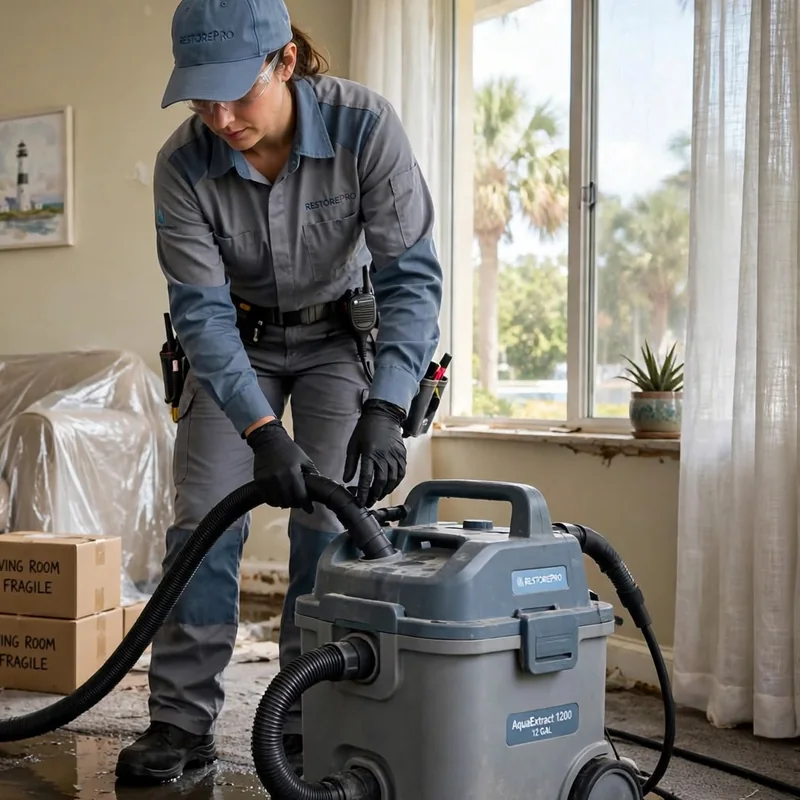
Find the Right Water Damage Service for Your Situation
Most people start with a problem, not a service name. Find the situation below that sounds like yours.
Water Is Still Coming In or Just Entered Your Property
Stop the source if you can do so safely, then get help quickly. Our emergency water damage restoration service covers sudden water intrusion. If a pipe broke, look at Burst Pipe Water Damage. If a tank is leaking, look at Water Heater Leak Cleanup.
Water Is Standing on Floors or in a Lower Level
Standing water needs to be removed before drying can begin. See Water Extraction & Removal. For a flooded crawl space, garage, or lower level, see Basement Water Damage.
The Water Is Gone, but Walls and Floors Still Feel Damp
Surfaces can look dry while moisture stays inside drywall, insulation, and subfloors. Structural Drying & Dehumidification explains how drying and moisture monitoring work.
The Water Came From a Storm, Flood, Roof, or Sewer
Outside water and sewage can contain contaminants and need extra care. See Flood & Storm Damage Cleanup, Roof Leak Water Damage, or Sewage Backup Cleanup.
You See Mold, Smell Mustiness, or Suspect a Hidden Leak
Visible growth or a musty odor often points to a moisture problem. See mold remediation or Water Leak Detection.
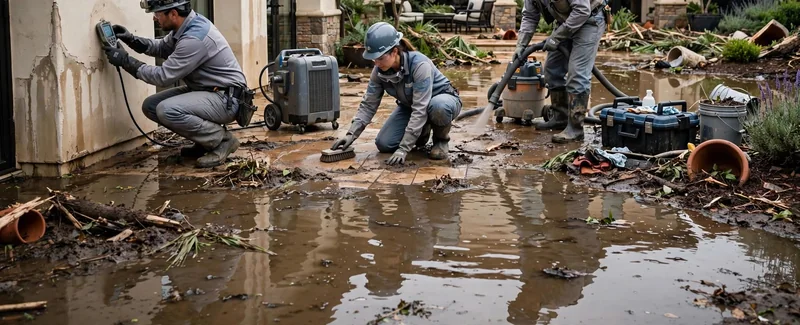
Our 12 Water Damage Restoration Services in Pensacola
Each service below has its own page, so you can read about the one that matches your situation.
Emergency Response and Water Removal
Emergency Water Damage Restoration: for sudden water intrusion that cannot wait. Acting early limits how far water spreads into floors, walls, and belongings.
Water Extraction & Removal: removes standing water so affected areas can be assessed and dried.
Structural Drying & Dehumidification: dries water-affected materials using air movers and dehumidifiers, with moisture readings to track progress.
Water Damage by Source
Burst Pipe Water Damage: cleanup and drying after a broken or failed pipe.
Water Heater Leak Cleanup: damage from a leaking tank, valve, or connection, often found in closets, garages, and utility rooms.
Roof Leak Water Damage: wet ceilings, insulation, and walls after rain gets in through the roof.
Basement Water Damage: water in basements, crawl spaces, and other below-grade or low areas.
Flood & Storm Damage Cleanup: cleanup after stormwater, heavy rain, and flooding, including water that may carry contaminants.
Sewage Backup Cleanup: careful cleanup of sewage-contaminated water, which should never be handled casually.
Specialty and Commercial Services
Commercial Water Damage Restoration: for offices, shops, and other business properties where water affects equipment, inventory, and daily operations.
Mold Remediation: for mold that grows where moisture lingers, with attention to the moisture source as well as the visible growth.
Water Leak Detection: helps you recognize signs of hidden leaks and assess moisture in affected areas.
What Affects the Scope of a Water Damage Job
Two properties with the same leak can need very different work. These three factors drive most of the difference.
The Type of Water
Industry guidance, including the ANSI/IICRC S500 standard, groups water into three categories. Category 1 comes from a clean source such as a supply line. Category 2 is used water, such as from a washing machine. Category 3 is heavily contaminated, such as sewage or floodwater. The higher the category, the more careful the cleanup, and some porous materials may need to be removed.
The Materials Involved
Tile and concrete often dry well. Carpet pad, drywall, insulation, and unfinished wood hold water longer. Older homes may add plaster walls and hardwood floors, which need a careful drying plan.
How Long the Water Has Been There
Water that sits for days spreads further and raises the chance of mold. A fresh leak caught quickly is usually simpler to deal with than damage found weeks later behind a wall.
Residential and Commercial Water Damage Services
Our services cover both homes and businesses. Homeowners and renters often need help with kitchens, bathrooms, bedrooms, and garages. Business owners and property managers need to protect inventory, equipment, and tenants. We also work with your insurance company by documenting the damage, and we can handle repairs and rebuilding after drying.
Water Damage Services Available Across Pensacola ZIP Codes 32501 to 32505
We provide these services across Pensacola, including ZIP codes 32501, 32502, 32503, 32504, and 32505, and neighborhoods such as Downtown Pensacola, North Hill, East Hill, and Aragon. Service availability depends on your address, so contact us to confirm. You can see the full list on our areas we serve page.
Customer Testimonials
Related Work That May Need Another Professional
Restoration deals with the water and the damaged materials. After drying, we can also handle repairs and rebuilding, such as drywall, insulation, and flooring. We do not repair the cause itself. A broken pipe may need a licensed plumber, a roof leak a roofer, and wet electrical equipment an electrician. Mold testing is a separate service. We will tell you when your situation needs another professional, so the source is repaired and the damage does not return.
Contact Pensacola Restoration Pro About the Right Service
Not sure which service you need? Describe what happened and we will point you in the right direction.
Reach Us Any Hour
Tell Us What You Have Noticed
Share your address or neighborhood, where the water came from, which rooms are affected, and whether water is still coming in. Have general questions first? Our FAQ page covers the most common ones.